Gatland brought his hard-earned rugby ethos from Wasps to Wales, accompanied by a robust team of conditioning coaches. His tenure saw the transformation of Welsh rugby from a stylish, expansive game to a more physical, confrontational style. This shift in tactics heralded a new age, where power and physical supremacy ruled the roost, epitomized by players like George North and Jamie Roberts, who exemplified this brute force approach.
Despite the successes, Gatland's method had its limitations, particularly against the All Blacks, who consistently outmaneuvered the Welsh using superior footwork and tactical acumen. This contrast in styles highlighted different approaches to creating and exploiting space on the field.
"The Alpha contest still holds, but there's always more than one way to skin a cat in rugby," said Sam Warburton, former Wales and Lions captain.
On the global stage, the WXV Global Series match between England and Canada proved revelatory. After a crushing previous defeat, Kevin Rouet, the Canadian coach, adapted his strategy. His experience with Saracens enriched his insight into the game, significantly impacting his approach to international coaching.
"For me, the goal is very simple and it is not a secret: the girls spend 80% of their time in a PWR environment. I think it's important we have this relationship to make sure both environments profit from each other. It's a win-win situation," stated Rouet.
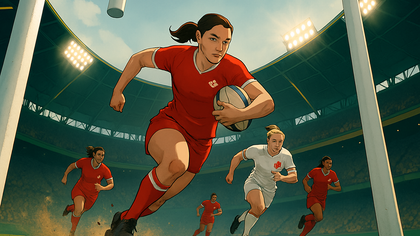
This strategy shift was evident in Canada's performance against England at Sandy Park. Despite England's dominance in physical confrontations, Canada effectively utilized the wider channels, marking a significant departure from Gatland's philosophy. Standout players like Asia Hogan-Rochester and Flo Symonds were instrumental, demonstrating that agility and precise execution could equalize or even surpass raw power.
The game ended in a 26-26 draw, a testament to Canada's ability to adapt and target weaknesses in the English setup. This outcome suggests that while power play remains a crucial element of modern rugby, flexibility and tactical innovation can also lead to success on the pitch.
Sophie de Goede, captain of the Canadian team, commented on their evolving strategy post-match, highlighting their growth and adaptability. "It's not like we're coming in to try and spy by any means. It's very much a selfish pursuit of trying to get better for the national team," she noted.
This match has perhaps ushered in a broader tactical evolution in rugby, hinting that the old adage of 'earning the right to go wide' may not be the only path to victory. As the game continues to evolve, so too do the strategies that define winning and losing on the world stage.