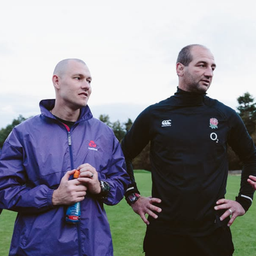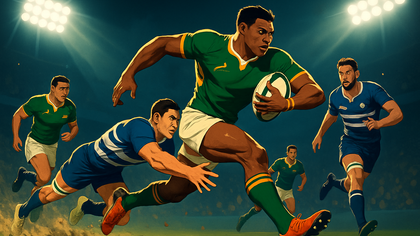
In the ever-evolving game of rugby, the South African team's strategy of employing a forward-heavy bench—often referred to as the 'Bomb Squad'—has stirred quite the debate. Sir Steve Hansen, a stalwart of New Zealand rugby, has shed light on the vulnerabilities this approach may pose.
During the 2019 Rugby World Cup, South Africa's tactic of using a 6-2 split between forwards and backs was revolutionary, helping them secure the championship. They continued this strategy, even opting for a 7-1 split at times, influencing other teams to adopt similar configurations. Yet, the All Blacks have maintained a traditional 5-3 split, underscoring a divergence in tactical philosophy.
Despite the successes, Hansen pointed out the inherent risks associated with South Africa's approach during the recent match against the Stormers. The match revealed the potential pitfalls of the 6-2 split when the Stormers faced injuries in crucial positions.
"The 6-2 split didn’t work in favour of the South Africans this time. They roll the dice every time they do it and they were unlucky in that they got two players injured in the same position,"
Hansen argued that such a strategy demands preparation for all possible scenarios, something that the Stormers' recent game highlighted. The lack of backline replacements led to significant disruptions when both half-backs were injured, forcing unorthodox changes that ultimately saw the All Blacks seize control and secure a 38-21 victory.
The evolving strategies point to an interesting dynamic in player roles. Rassie Erasmus, head coach of the Springboks, introduced a hybrid player, Andre Esterhuizen, who could operate both as a forward and a back, providing tactical flexibility. However, Esterhuizen's recent injury during a game against Argentina underscored the potential complications of this strategy.
Hansen reflected on his experiences managing Japanese side Toyota Verblitz, where similar adaptations were made.
"We’ve done it up in Toyota quite a bit because we had a guy that we converted from full-back to a blindside flanker so that allowed us to have flexibility,"
This adaptability raises questions about bench composition and whether teams like the All Blacks might experiment with a 6-2 split. Hansen mused about the potential of All Blacks' Damian McKenzie to cover half-back, which could allow for more flexibility in squad selections.
The debate around bench strategy is far from settled. As teams continue to innovate and adapt, the choices made by coaches like Erasmus and the responses from counterparts like Dave Rennie will undoubtedly shape the tactical landscapes of future matches. The ongoing discussion highlights the strategic depth and the high stakes involved in modern rugby, where every decision can influence the outcome of not just a game, but potentially a championship.