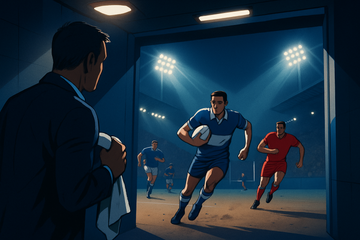
The first test match of the Rugby’s Greatest Rivalry series witnessed a subdued but attentive crowd of 60,000 at Ellis Park, as they silently observed the All Blacks perform their iconic pre-match challenge. Despite the unusual calm, New Zealand secured a 33-16 win over the Springboks.
"I enjoy the haka. I mean, for me, it’s an honour being part of that. Obviously, the haka does something to them. It’s not doing something for us. It’s just a great thing for us to be able to say, ‘Jeez, I faced this again.’ And I think if you look at the first 30 minutes of the game, I don’t think that gives them an advantage or us a disadvantage. So that’s why I think staying quiet while they’re doing that is the respectful thing."
Erasmus firmly dismissed any idea that the altered atmosphere provided the All Blacks with a psychological edge. His approach to the haka aims to foster respect, setting aside home-field tactics typically used to intimidate the opposition.
Looking ahead, the teams are set to reconvene at Cape Town Stadium for the second test. Erasmus expressed his anticipation of continued respect for the haka, coupled with a touch of humor about the expectations for the upcoming match audience in Cape Town.
"I don’t think the New Zealand supporters are going to make a noise while they do the haka. I’m pretty sure the Capetonians will also do the same. It’s got nothing to do with how the game gets played. It doesn’t influence it. If you’re going to make a noise while they do it, it’s just stupid."
Despite the respectful quiet during the haka, the All Blacks felt quite at ease at Ellis Park, swiftly adapting to the environment and dominating the game, serving the Springboks a stark reminder of their prowess on the field.
The discussion about the impact of the haka and fan behavior adds a fascinating layer to the storied rivalry between these two rugby powerhouses, emphasizing that the real battles are fought and won through strategy and skill on the pitch, not pre-game ceremonies.