Once again, the rugby world braces for a monumental clash of coaching titans as Rassie Erasmus and Dave Rennie pit their wits against each other. This isn’t just a game; it’s a battle over the fundamental philosophies that define modern rugby.
The tale of two contrasting strategies begins with Rassie Erasmus, whose approach is all about precision and power. His method involves a trifecta of high-yield kicking, a suffocating blitz defense, and a formidable set-piece game. Erasmus seeks every marginal advantage, meticulously applying tactics that pressure opponents into submission.
Contrastingly, Dave Rennie introduces chaos into the structured world of Erasmus. Rennie’s focus is on disrupting the breakdown, slowing down ball possession, and encouraging a style of play that thrives on rapid transitions and exploiting spaces behind the advancing defense lines. His teams embody resilience and gritty confrontation, making them a formidable foe in the breakdown battles.
Rennie’s impact on clashes with South African teams is well-documented and deeply respected. His record speaks volumes, with a notable triumph over a dominant South African U20 team and consistent victories against SA franchises during his tenure with the Chiefs.
"Any time a new coach is appointed at the All Blacks, it creates an interesting period ahead. We are wary ahead of Rugby’s Greatest Rivalry."
Erasmus acknowledges the challenge Rennie’s appointment presents and hints at the intense tactical duel expected in upcoming tests. While Erasmus’s teams are engineered to choke the life out of opponents through structured play, Rennie’s squads are adept at turning supposed weaknesses into explosive counterattacks.
Both coaches also bring distinct leadership styles. Erasmus combines emotional transparency with a fierce patriotism, creating a 'siege mentality' among his players. They know exactly what is expected, each member a cog in a larger, well-oiled machine.
In contrast, Rennie, with his roots in teaching, fosters a culturally cohesive environment. At the Chiefs, he promoted a sense of brotherhood under the ethos "At every bend, a chief," which galvanized his players into a tightly-knit unit. Despite his quieter demeanor, Rennie’s rigorous coaching sessions are legendary for their intensity, preparing his players for the ferocity of test match rugby.
"As a South African coaching against him, I think he might get it right at Test level but as far as I understood he had no mercy for guys [his players]. Not in a bad way but driven to get them ready for Saturday."
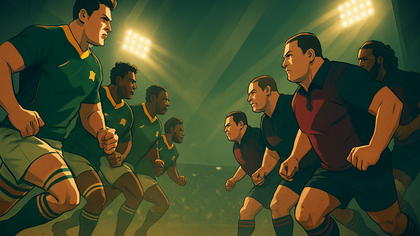
This encapsulates the essence of what makes the matchups between Erasmus and Rennie so captivating. It’s not merely a clash of tactical minds but a collision of deeply ingrained rugby philosophies and cultures. South Africa's master planner against New Zealand's tactical saboteur sets the stage for confrontations that are as strategic as they are physical. These aren’t just games; they’re chess matches on grass.
The upcoming tests promise to be neither clean nor predictable. They will be a testament to strategy, resilience, and the sheer unpredictability of rugby—a sport where every match is as much about the players on the field as it is about the minds orchestrating their movements from the sidelines.